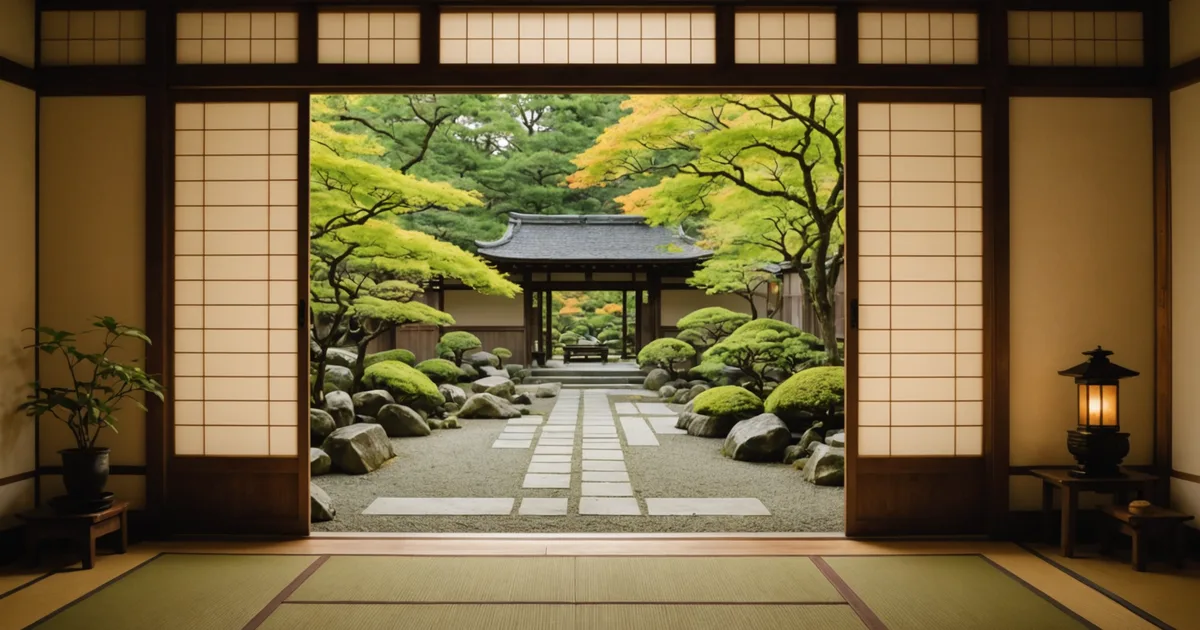
Higashiyama is one of the most tourist-saturated districts in Kyoto. The stone-paved lanes between Yasaka Shrine and Kiyomizudera are walkable year-round, but in autumn, when the maple trees color and the crowds that follow are at their peak, the neighborhood operates at an entirely different intensity. For a small traditional inn on one of those lanes, autumn koyo season is the year's most important window and its most demanding week of operations.
Haruki, who runs a 14-room inn with his sister that has been in the family since the 1970s, joined Ikura's early-access program in September 2025, about six weeks before the autumn leaf season. I am sharing his experience here with his permission, using only his first name. He was skeptical going in. He was not skeptical after.
The situation before setup
Haruki's inn draws roughly 60 to 70 percent of its bookings from international guests, heavily weighted toward Chinese visitors from Shanghai and Guangzhou, with a meaningful number from Korea and Taiwan and a smaller but consistent number of English-speaking guests from Australia, Singapore, and the UK. His sister handles most of the front desk communication during weekdays; he takes evenings and peak periods.
Before Ikura, their foreign-language communication workflow was: receive a message, paste it into a translation app, read the translated version, draft a response in Japanese, translate it to the guest's language, copy and paste the translation back into WhatsApp or the OTA messaging system. For a single message this takes two to four minutes. During the two weeks leading into koyo season, they were handling 30 to 50 foreign-language messages per day, with the volume doubling in the final 72 hours before a peak weekend.
Some messages were answered the same day. Some were answered the next morning. A few, during the most intense stretches, waited longer than that. Haruki described the feeling as "always behind, never caught up, dreading when a new message appeared."
The setup process
The onboarding took about three hours, spread across two sessions. The first session covered connecting the WhatsApp Business API number and the LINE Official Account to the Ikura system, and setting up the basic property profile. The second session was FAQ library building.
For this inn, the FAQ library ended up with 54 entries across the core question categories: access instructions (from Kyoto Station, from Osaka by shinkansen, from Kansai airport, and by car with parking options), check-in and checkout times including early check-in handling, room types and what each includes, kaiseki dinner timing and dietary accommodation policy, the inn's private Hinoki cypress bath (kashikiriburo) booking system, the rotenburo open-air bath schedule and its rules, the nearest convenience store and pharmacy, and a section of Higashiyama autumn viewing tips specific to the inn's location.
That last category was something we had not initially planned but which Haruki added himself. A significant share of his pre-arrival messages are from guests asking which walking routes from the inn are best for autumn foliage, and when the peak color typically reaches specific trees. He wrote out detailed answers to those questions in Japanese, which we then calibrated into Chinese, Korean, and English responses that matched the tone a knowledgeable local host would use rather than a generic tour guide voice.
The language calibration step took longer than building the factual FAQ content. For the Chinese responses, we worked to match the formality and warmth appropriate for guests who have booked a traditional Japanese inn experience. For the Korean responses, the polite form was more direct than the equivalent Japanese register. Getting these tones right required native speaker review on our end, which is part of what the onboarding process covers for early-access partners.
The first week with the system running
In the first week, the system handled 78 incoming foreign-language messages without staff intervention. Haruki and his sister reviewed the handled messages in batches once a day rather than monitoring them in real time. The automated responses were going out within a few minutes of receipt, including to messages that arrived at 11pm and 6am when neither of them would normally be at the desk.
Twelve messages were flagged for staff review during that first week. Eight of those were genuine judgment calls: guests requesting specific room configurations that required checking availability, a late-arrival situation that needed a physical key arrangement, and two cases where a guest's question did not fit any FAQ category and needed a custom response. Four of the flags were cases where the confidence threshold on the response was set conservatively and the system correctly deferred rather than risk a wrong answer.
After the first week, Haruki added six new FAQ entries covering the question types that had generated those four conservative deferrals. The system's performance in the second week was noticeably cleaner.
During koyo season peak
The autumn leaf peak in Higashiyama typically runs for about ten days in mid-to-late November, depending on the year's temperature progression. During the 2025 peak, the inn received 187 foreign-language messages in a ten-day window, across Chinese (the dominant volume), Korean, English, and a small number of French and Taiwanese Mandarin messages.
The system handled the large majority automatically. Haruki's staff time on messaging during the peak window dropped substantially compared to prior years. His description: "I stopped dreading the phone. I checked the queue in the morning, handled the few things that needed a real answer, and spent the rest of the day focused on the guests who were actually at the inn."
There were two situations during the peak that required direct human handling: a guest from Guangzhou who had a medication question that needed a clear answer about the nearest pharmacy with evening hours (added to the FAQ the same day), and a family whose reservation details did not match what was in the system due to an OTA update that had not propagated correctly. Both required personal attention and received it within minutes because the staff were not occupied with routine message queue management.
What surprised him
Haruki mentioned two things that surprised him about the first six weeks, and both are worth noting for other operators considering this.
The first was the response quality in Chinese. He had expected the responses to be technically correct but tonally flat. Instead, a Chinese-speaking guest who had corresponded with the automated concierge before arriving commented during check-in that the inn "responded very naturally." The guest did not know the responses were automated. Haruki found this more meaningful than any metric.
The second was the FAQ building process itself. He had expected it to feel like filling out a form. Instead, writing out the answers to the questions his guests most often ask forced him to clarify policies he had been communicating inconsistently for years. The kashikiriburo booking policy, for example: he had different answers depending on who was asking and in what context. Writing one clear answer in Japanese, which then became the source for every language response, resolved that inconsistency. The FAQ library is now the canonical version of what the inn offers, not a secondary document.
What it does not fix
This is not a uniformly positive account, and I want to be honest about the limits. Haruki's system currently covers WhatsApp and LINE. He still manages the OTA messaging systems separately, which creates a split inbox situation that we are working to address in the roadmap. During the peak window, there were a small number of guests who reached out via OTA messaging rather than direct WhatsApp or LINE, and those messages were handled manually.
The FAQ library also requires ongoing maintenance. Haruki added entries after the first week, and he found three outdated entries in early December when local access to the inn changed temporarily due to road construction. A property that sets up a FAQ library and does not review it periodically will accumulate inaccuracies. That is not a technology failure, it is the same maintenance requirement as keeping your website's information current, but it is worth stating clearly.
Six weeks is a short window. The changes Haruki describes are real, but they will need to hold across a full year's cycle, including cherry blossom season in spring 2026, before either of us would call this a long-term validated outcome. What we can say now is that the autumn 2025 peak, which was the most difficult operational period for this property, went measurably better than the prior year with this system in place.